
What Is Schema.org? A Beginner's Guide to Schema Markup for SEO
Updated: Jun. 29, 2026 & Aug. 4, 2021
Originally Published: Feb. 13, 2019
You’ve identified your keywords, optimized your content, and written your metadata, all for the purpose of improving your SEO. Now it’s time for the next critical move: implementing schema.org markup, one of the most important and underutilized SEO tactics available.
What Is Schema.org?
At its core, schema.org is a shared vocabulary of code that you add to your website to help search engines understand your content.
A search engine can scan the text on your page, but it doesn't always know what that text means. If your page mentions "Apple," is that the tech company, the fruit, or a local orchard? Schema.org markup removes that ambiguity by giving search engines explicit context about what your content is describing.
It was created in 2011 when Google, Bing, Yahoo!, and Yandex decided to stop doing their own thing and build one universal standard together. The result was schema.org: a free, open vocabulary that all major search engines recognize and support.
So, what do you actually get out of it? When search engines can clearly understand your content, they reward you with rich snippets, those eye-catching search results that show star ratings, prices, FAQs, event dates, and more right on the results page. And those enhanced results get more clicks.
Are LLMs affected by Schema.org?
One more thing worth knowing: schema.org isn't just about traditional search anymore. As AI-powered tools and assistants play a larger role in how people find information online, structured data is becoming one of the key ways those systems can accurately understand and represent your business.When someone asks a question that your business could answer, structured data helps AI tools surface the right information and present it confidently. Without it, those tools are left to interpret your content on their own, leaving more room for gaps or inaccuracies.
Schema.org Markup for SEO
Schema markup, which is found at schema.org, is microdata you can add to your website to tell search engines what your site content is about. Once you add schema markup to your webpage, it creates a rich snippet, or enhanced description, in the search results.
The following example shows a search engine results page with and without a rich snippet. In this case, ratings markup is shown in one of the two results. With the rich snippet, you can see the product ratings, pricing, and location. Which results are more likely to be clicked on?
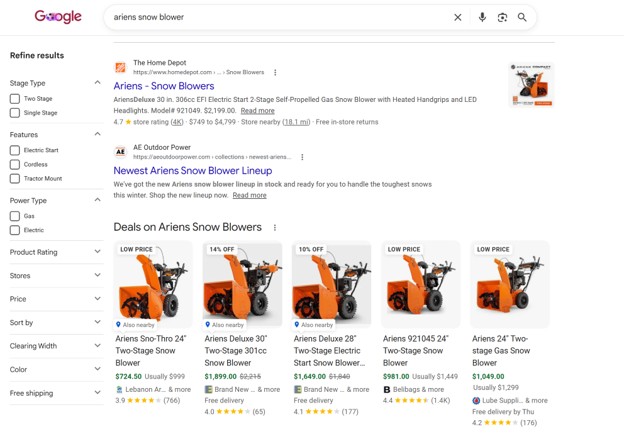
Studies have shown that the rich snippets with schema.org markup can increase your click-through rate by up to 30%. So why aren’t more people using them?
The truth is that schema.org markup can be confusing and often difficult to implement if you're not familiar with code. But it doesn’t have to be. Here's how you can get started with schema.org markup for your website.
Types of Schema.org
If you visit schema.org, you'll likely go down a rabbit hole and get lost in all of the different types of schemas available. The list currently consists of more than 800 types and continues to grow. Here are some of the more commonly used schema types:
Products
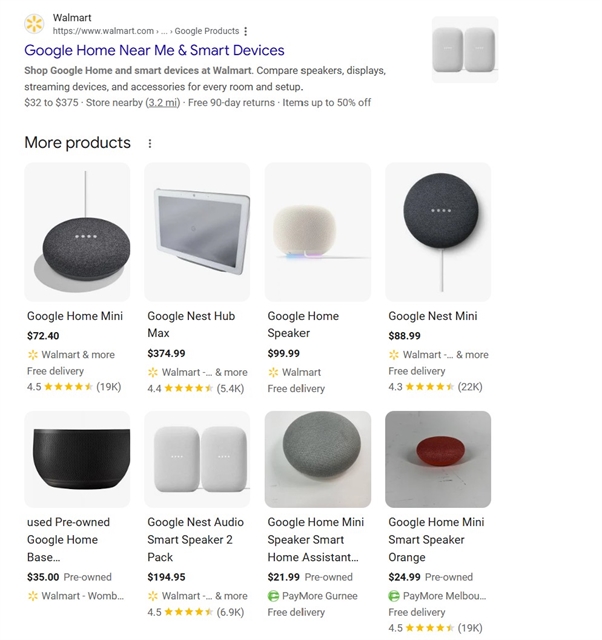
For e-commerce websites, product schema is one of the highest-value markups available. It lets you display price, availability, and star ratings directly in search results as a mini product listing.
Articles & Blog Posts
Article schema helps Google understand editorial content: who wrote it, when it was published, and when it was last updated. This is particularly useful for E-E-A-T.
Events
If your business hosts or promotes events, event schema displays the date, time, location, and ticket information directly in search results.
Videos
Video schema helps your video content appear in Google's video search results with a thumbnail, duration, and description.
Reviews & Ratings
Review markup displays star ratings in search results and can be applied to products, services, recipes, and more.
Medical & Legal
Both medical organizations and law firms have dedicated schema types that establish credibility and help search engines properly categorize specialized professional services.
The list goes on and on. The good news is you don't need to implement all of them. Focus on the schemas that align with your content and business goals so you can maximize your search visibility and relevance.
How to Implement Schema.org
There are three ways to implement schema.org markup code:
- JSON-LD
- Microdata
- RDFa
According to Google and Bing, JSON-LD is the recommended way to implement schema.org markup. And, depending on your content management system, JSON-LD is probably the easiest to implement. To implement your schema.org markup, follow these steps:
Step 1: Identify the Schema You Want to Implement
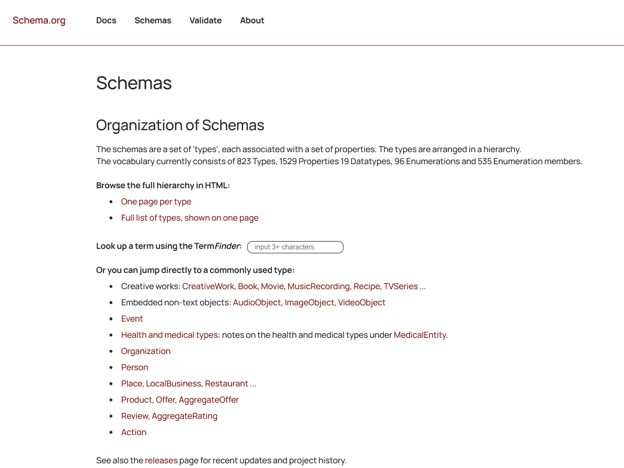
Go to schema.org and locate the type of schema you want to implement. The website provides a comprehensive list of schemas, but it also gives you the ability to jump directly to a commonly used type.
Step 2: Use a Schema Builder, or Copy the Code from Schema.org
There are tools available to help developers and non-developers alike to write JSON-LD code. Alternatively, schema.org provides examples of JSON-LD markup for every type of schema.
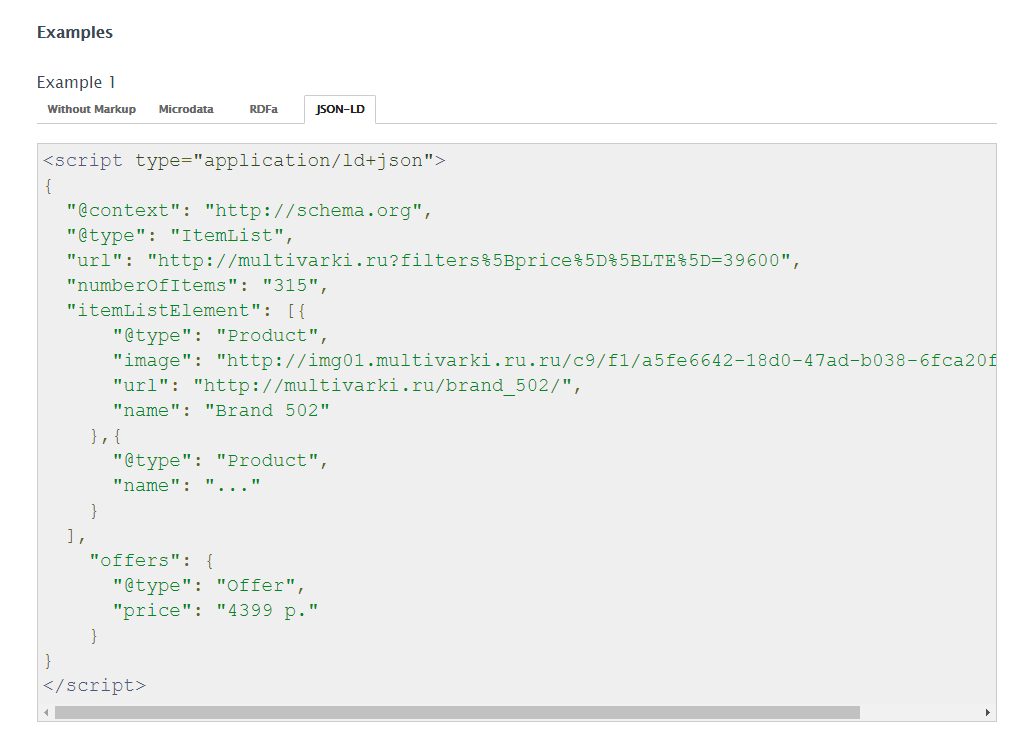
Once you have the example code, you can replace your data in each field. Then your JSON-LD code will be ready to add to your website page. Google indicates that the JSON-LD code should be added into the <head> of your webpage. If that isn't an option, you can also add it to the <body> of your website.
Every schema has specific required fields. For example, if you're implementing product schema data, you'll need to include the product name and offer details. If you don't include the required fields in your code, Google won't display rich results for that structured data on the SERP. Additionally, some fields aren't required but are recommended, such as including a price range when implementing Local Business schema.
As a rule, you should include as much information as possible for each schema you implement.
Step 3: Test Your Schema.org Markup
Once your markup is live, validate it with the Schema Markup Validator. It checks your markup against the full schema.org vocabulary and flags syntax errors. (This tool replaced Google's Structured Data Testing Tool, which Google retired in 2021.). Then run the URL through Google's Rich Results Test to see whether the page is eligible for rich results in Google Search. After your pages are indexed, the Rich Results report in Search Console will surface errors and warnings across the entire site.
Two caveats: eligibility isn't a guarantee. Google decides, for each query, whether to show a rich result, and only a subset of schema.org types can produce one. Markup for unsupported types won't generate a rich snippet, but structured data still helps search engines understand the entities and relationships on your page.
An Example of Schema.org Implementation
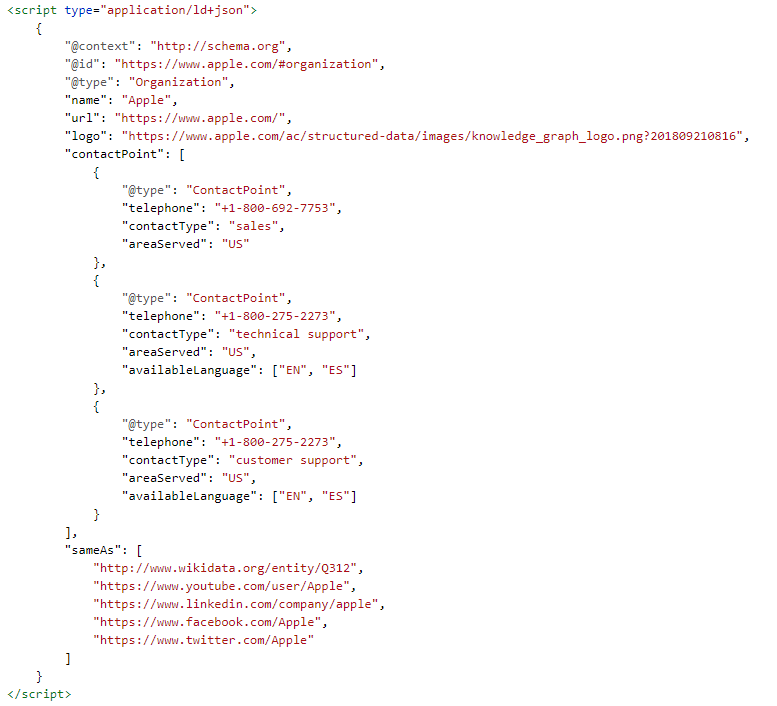
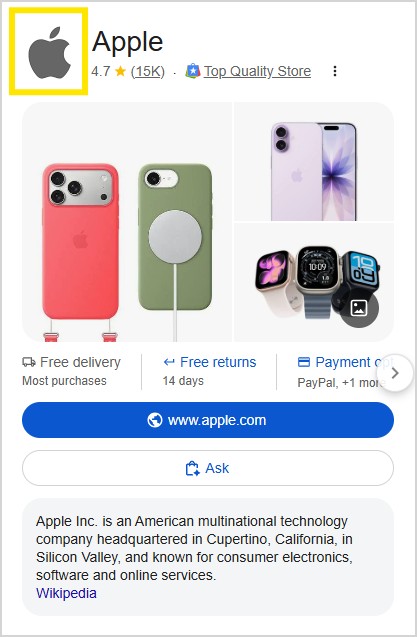
If you look at Apple.com’s source code, you'll find Organization schema markup that instructs Google to display key brand details in the Knowledge Panel, including the Apple logo, star ratings, and product images. The more complete your Organization schema, the more control you have over how your brand appears in search results.
Summary
When it comes to SEO, the goal is to make sure Google understands everything about your website and your business. Describing your services clearly is key to ranking highly in search results.
Schema.org and structured data are a powerful way to communicate the nature of your website to Google and will only continue to grow in importance as part of an effective SEO strategy. So, get started with your schema.org strategy today by identifying which structured data types would most benefit your site and its users.
Northwoods is here to help if you get stuck or have questions about schema.org. Don't hesitate to reach out!